When Advocacy Is Also The Work
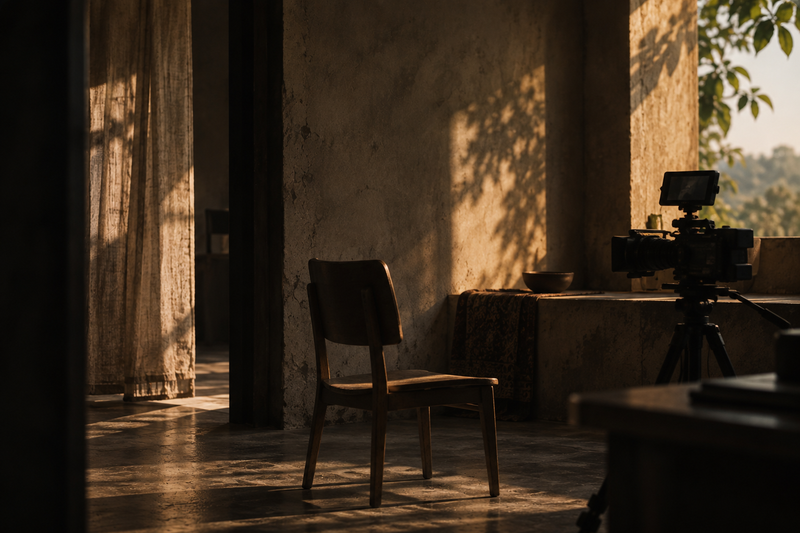
There is a particular tension I have encountered more than once in the work I do: the assumption that being a professional service provider and being an advocate are two separate things. I understand where the distinction comes from. I am a filmmaker.
Organizations hire me to make films. I work from briefs, agree on scopes, work within budgets and deliver against deadlines. Filmmaking is my profession, and I take the professional side of it seriously. A cause needs researchers. Lawyers. Health professionals. Communicators. Photographers. Designers. Filmmakers. Writers. Strategists. Educators.
People bring the skills they have developed professionally into the issues they care about. Sometimes the profession and the advocacy align almost perfectly. Sometimes they don’t. And sometimes advocacy simply influences the way someone practices their profession.
That distinction matters to me because filmmaking is where my professional skill and my advocacy have, at different points, met. I don’t have to stop being a professional filmmaker for the work to be advocacy-related. And I don’t have to turn every filmmaking job into advocacy to be an advocate. Both things can be true.
BEING PAID DOES NOT ERASE THE CONTRIBUTION
There is also something uncomfortable about the way we sometimes talk about paid work in advocacy spaces. There can be an assumption that if you are being commissioned, you are simply a service provider. And technically, yes—I provide a service. I am not uncomfortable with that. My expertise has value. My time has value. My training has value. My labor has value.
The fact that an organization pays me to use those things does not make the work less important to me.
In fact, I think there is something worth acknowledging about the professionalization of advocacy itself. Organizations working on serious social issues need people who know how to do things well. They need people who understand their craft. They need people who can take an idea, a body of research or a lived experience and communicate it responsibly.
That work requires expertise. And expertise is labor. They need people who can take an idea, a body of research or a lived experience and communicate it responsibly.
That work requires expertise. And expertise is labor. Being paid for that labor does not automatically tell you what someone believes about the issue they are working on. It certainly doesn’t tell you whether the work matters to them.
For me, the professional and personal parts of the work exist alongside each other. I can be hired because I am a filmmaker. I can also bring an existing commitment to the issues and communities represented in the work. Those two facts don’t cancel each other out.
THE CAMERA IS NOT NEUTRAL
This is also where my training in filmmaking becomes important. Film school taught me technical and theoretical aspects of the craft, but it also taught me to think about representation, ethics, authorship and the relationship between filmmaker and subject. Those questions become very real when you are documenting people’s lives.
Who gets to tell the story? What happens when you decide what the audience gets to see? What context do you give someone? What do you leave out? What does consent actually mean when someone is sharing something vulnerable with you? What happens to that story after the project is finished?
These aren’t questions I can separate from the work simply because I am there as a hired filmmaker. The camera is a technical tool, but what happens through it is not purely technical. There is judgement involved. There is interpretation. There is power. And there is responsibility. That is why the way I work matters to me just as much as what I produce.
NOT EVERY PROJECT IS ADVOCACY
I think this distinction is equally important. Not every film I make is advocacy. I work across different kinds of projects. There are commercial projects. Corporate work. Creative projects. Brand stories. Content production. Sometimes I am simply doing a job.
I don’t think there is anything contradictory about that. Being an advocate does not require every part of your professional life to serve your advocacy. In the same way, having a profession that sometimes overlaps with advocacy does not mean every professional decision you make has to be political or social.
The overlap can be specific. It can be occasional. It can be deeply integrated into some projects and completely absent from others. What matters to me is recognizing that the two don’t have to be artificially separated.
THE SKILL BECOMES THE CONTRIBUTION
When I look back at the work I have done in this space, I don’t think the most useful question is whether I was acting as a filmmaker or an advocate. I was a filmmaker. And filmmaking was the way I was able to contribute. That distinction feels important.
I may not always be the person standing at the front of a campaign. I may not be the person writing the policy document or organizing the community meeting.
But I have a skill. I know how to listen for a story. I know how to build a narrative. I know how to work with images and sound. I know how to create something that can take a person’s experience beyond the room where it happened. That is what I bring.
And sometimes the most meaningful way to participate in something is to bring the skill you have spent years developing.
WHERE I HAVE LANDED
I don’t think advocacy and professional practice need to be competing identities. Sometimes they meet directly. Sometimes they exist alongside each other. Sometimes one shapes the way the other is practiced. For me, filmmaking is my profession.
Advocacy is one of the ways I use that profession. And when those two things meet, I don’t think the fact that the work is commissioned makes the contribution less genuine.
If anything, it makes me more conscious of the responsibility that comes with being trusted to tell someone else’s story. The work can be professional. The labor can be paid. The relationship can be contractual. And the advocacy can still be real. The filmmaking is my profession. Advocacy is one of the ways I use that profession.
That is probably the clearest way I know to describe where I am now. When I pick up a camera, I don’t leave the rest of myself behind.